The Film
What might the surface of a potentially habitable planet actually look like?
This short science film explores LHS 1140 b, a nearby super-Earth located roughly 48 light-years away. Current observations suggest it may be a water-rich world with an atmosphere, vast regions of ice, and possibly a dark ocean permanently facing its cool red dwarf star.
Using current scientific data, climate models, and cinematic visualization, we travel from Earth to the LHS 1140 system and imagine several possible environments across the planet, from open alien seas to frozen plains and permanent twilight.
A journey to a world we have found, but never seen.
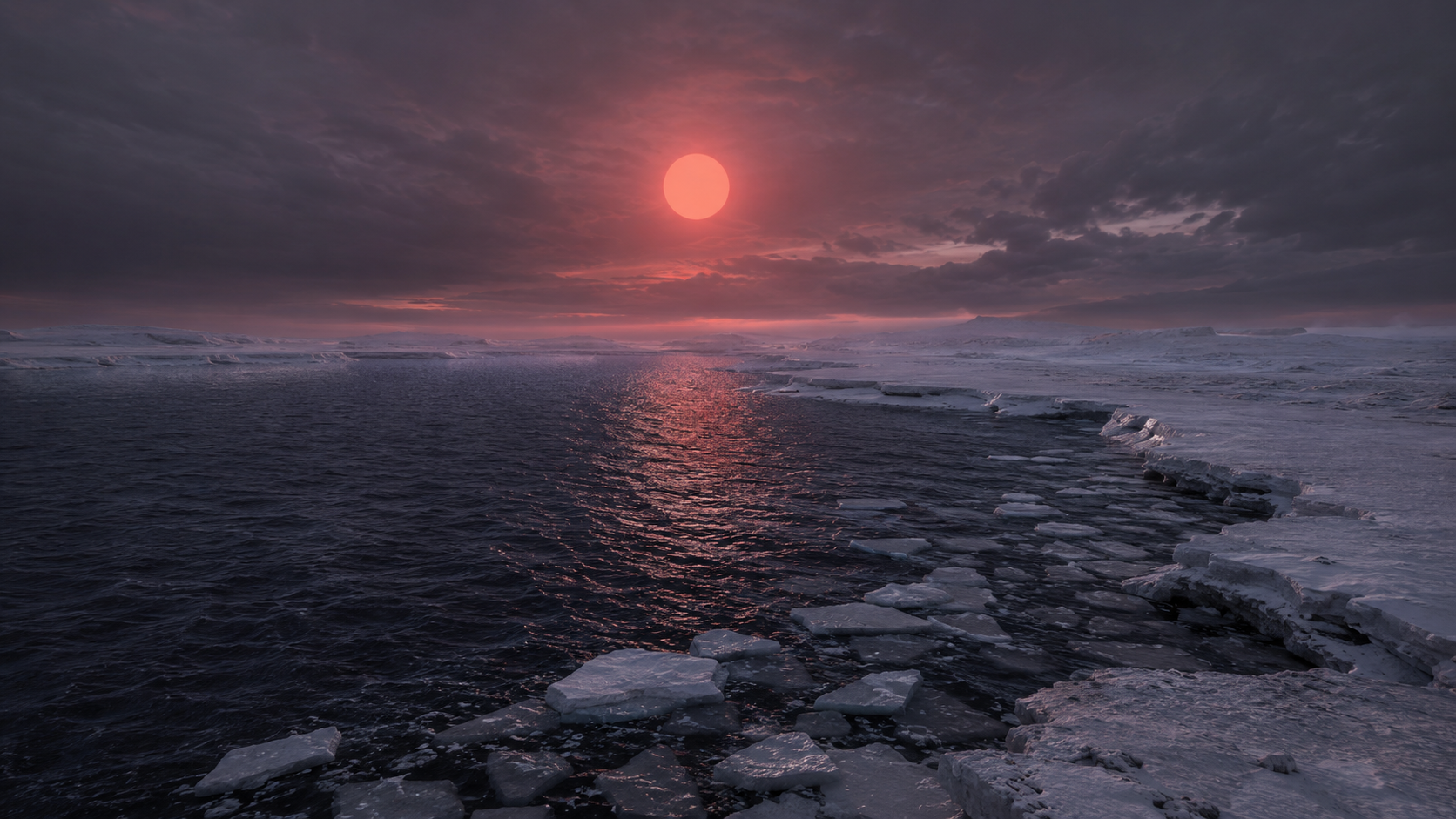
Across one world
A world locked toward its star has no single climate. From the warm ocean beneath the sun to the frozen far side, these are the environments the film imagines, each a scientifically informed guess, none a photograph.
A close
neighbour
LHS 1140 is a small, cool red dwarf in the constellation Cetus, one of the nearest stars known to host a potentially habitable world. At 48 light-years, its light left the star around the time of the first Moon landings.
The film opens with this journey outward, leaving Earth, crossing the dark, and arriving at a sun that burns a deep, quiet red.
The world in numbers
{{ f.note }}
No surface images of LHS 1140 b currently exist, and no evidence of life has been detected. All planetary views shown here are scientifically informed artistic reconstructions based on current observations.